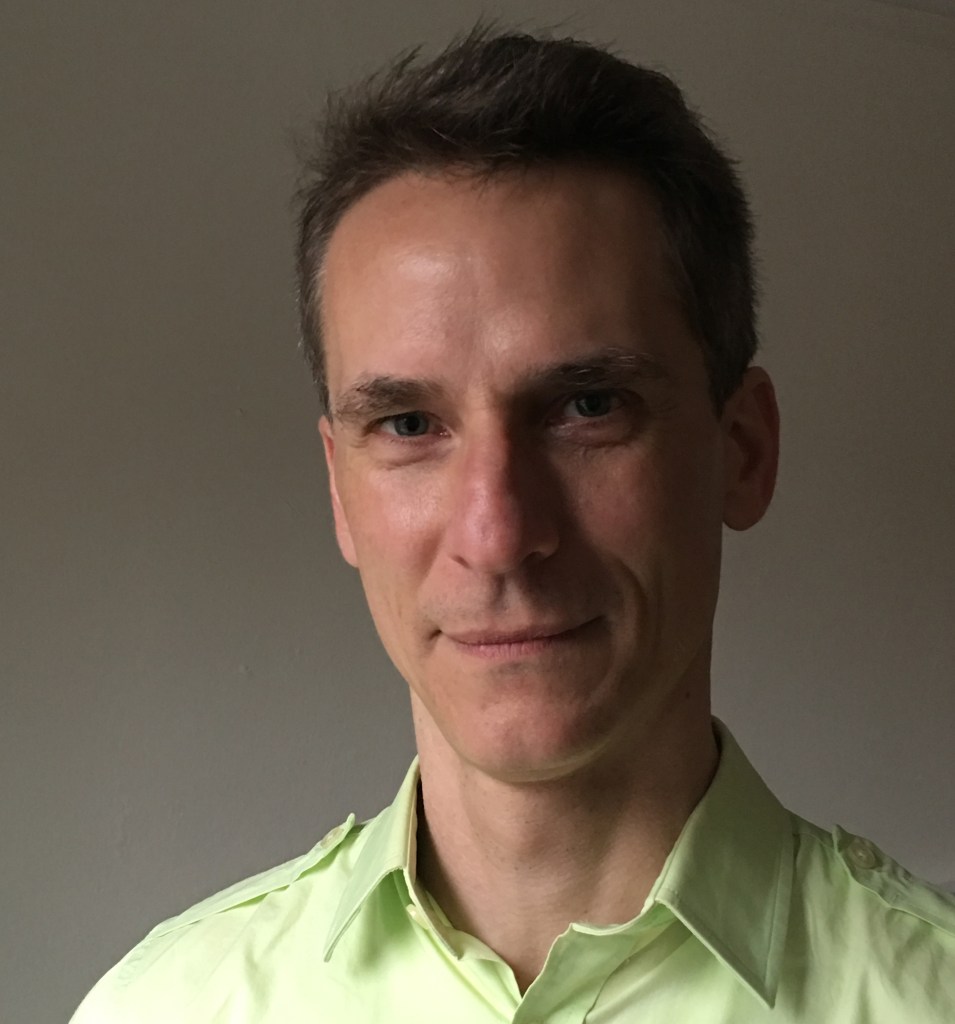
Derick graduated from Elizabeth Seton College (now Iona University) with a degree in communications and the School of Visual Arts, where he received a BA and was a recipient of the Chairman’s Grant.
His work has been favorably reviewed in The New York Times, Vogue, GQ, and NPR. He has exhibited throughout the U.S., with commissions from the City of San Francisco and the City of New York. Internationally, Derick has had solo exhibitions with Swire, Hong Kong; the YIA Art Fair, Paris, France; de Warande in Turnhout, Belgium; and Museum Rijswijk, The Hague.
Recently, Derick was a visiting artist at Fashion Institute of Technology and Parsons School of Design. He has received four consecutive grants from New York State and the City of New York.
In May, he installed work for a two-person show with Kelly Reemtsen at Gallery Oxholm in Copenhagen, Denmark.
As Reify Creative’s Senior UX Director, we can count on Derick to prioritize the user’s perspective in every project. That includes his work with wireframes, personas, information architecture, user research, A/B testing, competitive analyses, and a lot more. But there’s so much more to Derick than UX. Reify’s Founder Lisa Wright sat down with Derick to hear about his extensive career in the arts and learned more about his creative process. Enjoy!
LISA
Hi, Derick! We’re so excited to learn more about you. First, tell us a little about your professional background and then we’ll get into the fun stuff.
DERICK:
I’ve been a UX leader for over 20 years, working across a wide mix of projects and industries. I’m an empathy-driven designer, which makes me especially strong at end-user research. But I’m also a bit of a techie and a process geek—so… digging into complex systems and making them more intuitive is something I really enjoy, too. Along the way, I’ve worked at some great NYC agencies, and my work has been recognized with a couple of IAC Awards and a Standard of Excellence Award from the Web Marketing Association.
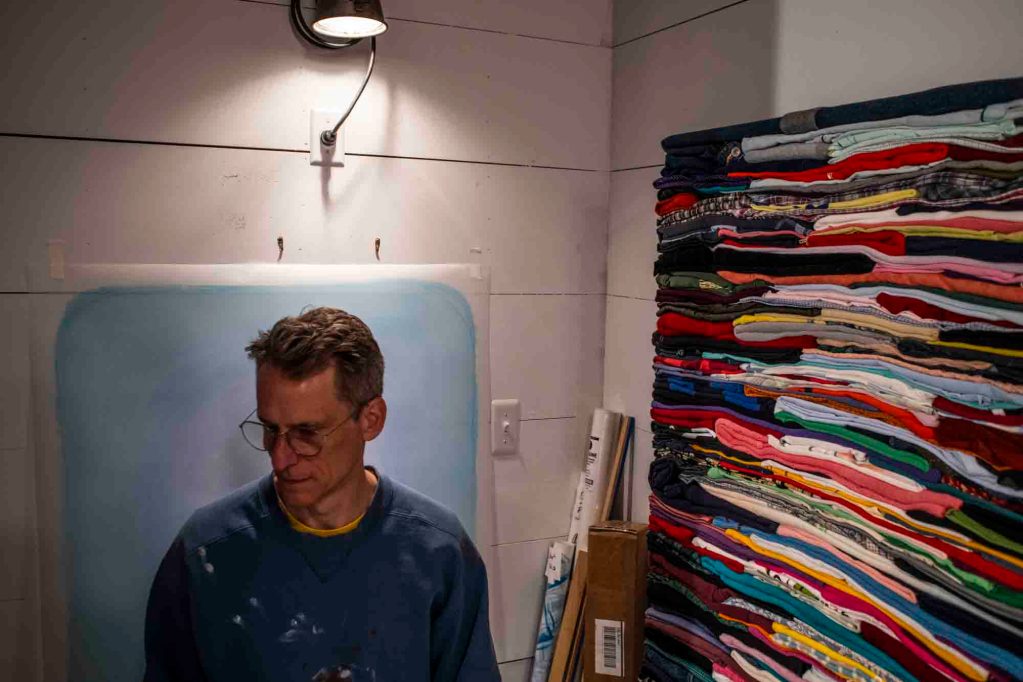
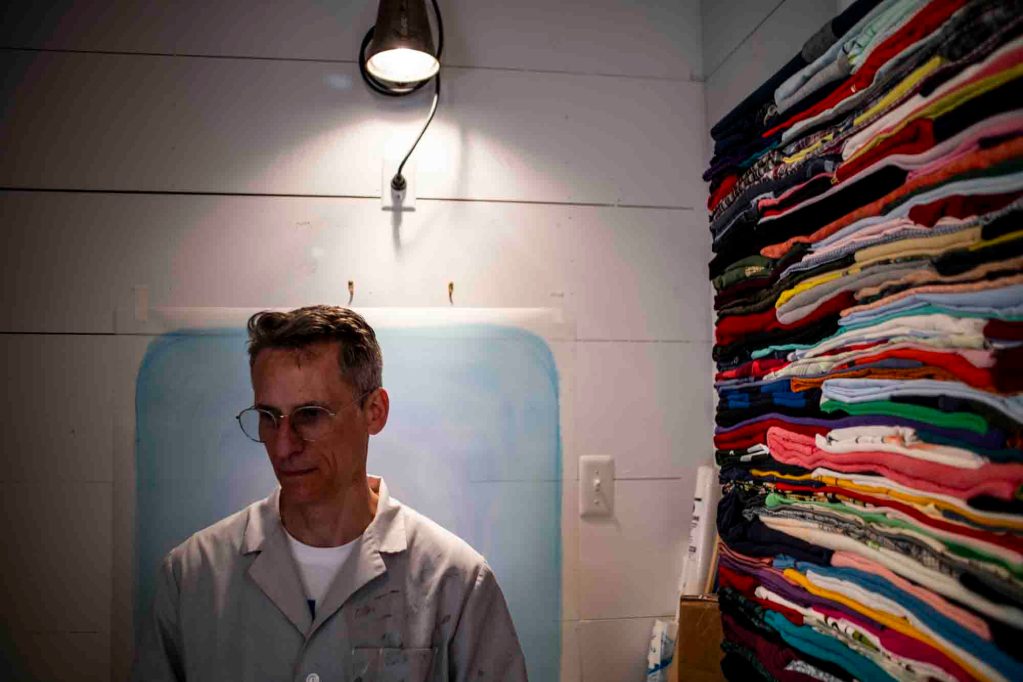
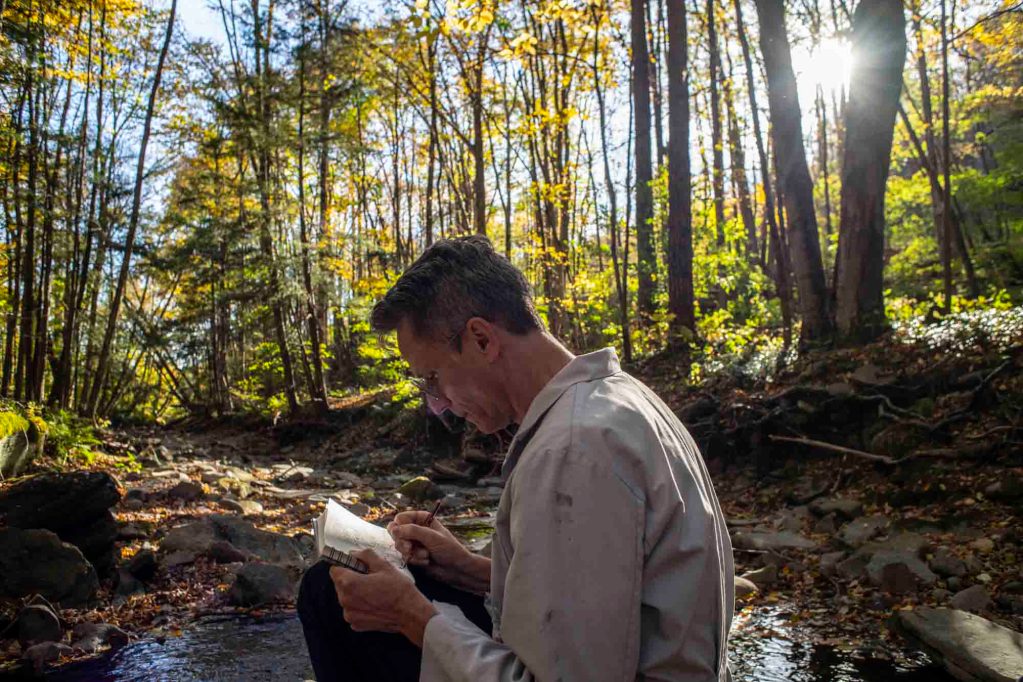
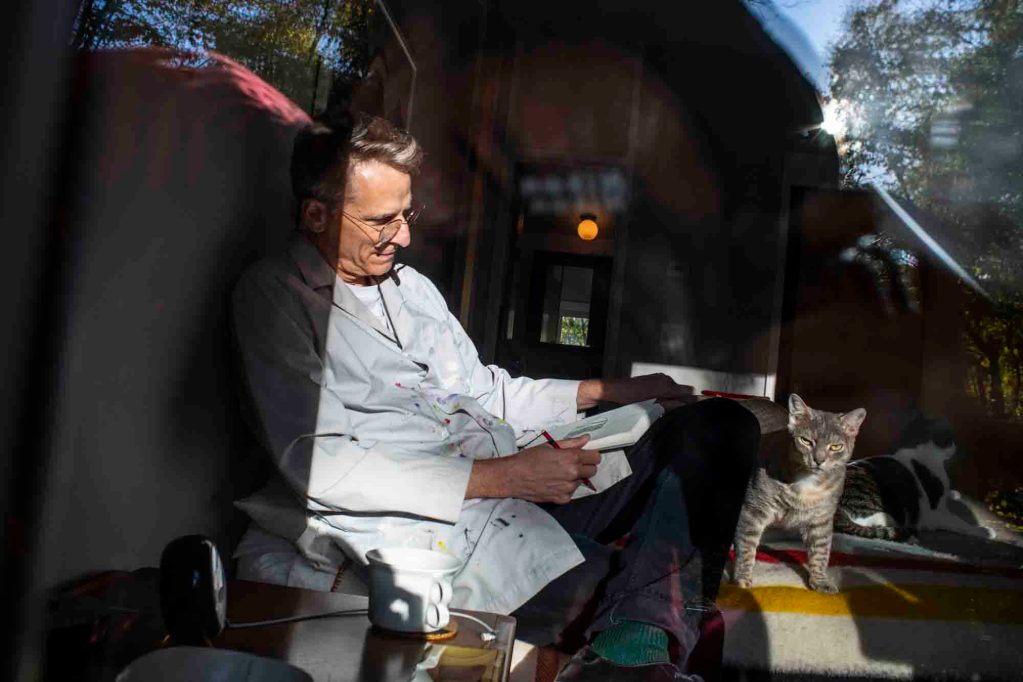
Photos by Arien Chang
LISA:
That’s awesome. So, aside from your incredible UX work, you’re also an amazing artist. First off, can you define what art means to you?
DERICK:
Wow, thanks Lisa! I wouldn’t dare try to define art outright, but in my mind, every creative outcome falls somewhere on a scale. On one end, there’s work that’s pure eye-candy, titillating or entertaining, asking almost nothing of the viewer. On the other end, there’s work that’s obtuse, conceptual, and demanding. It challenges the viewer to think, investigate, or wait for the work to unfold.
Personally, I gravitate toward work that challenges me—but it also has to be generous. It should invite engagement, not just require it.
LISA:
I like that idea. So who are the artists that you gravitate toward the most? Who are some of your favorites?
DERICK:
I love Ann Hamilton, Christian Boltanski, Michael Pistoletto, Mike Kelly, and Do Ho Suh.
And for performance, Mierle Laderman Ukeles & Linda Montano.
LISA:
During your creative career, what types of pieces or styles have you focused on? What are your favorite or most notable pieces you’ve produced?
DERICK:
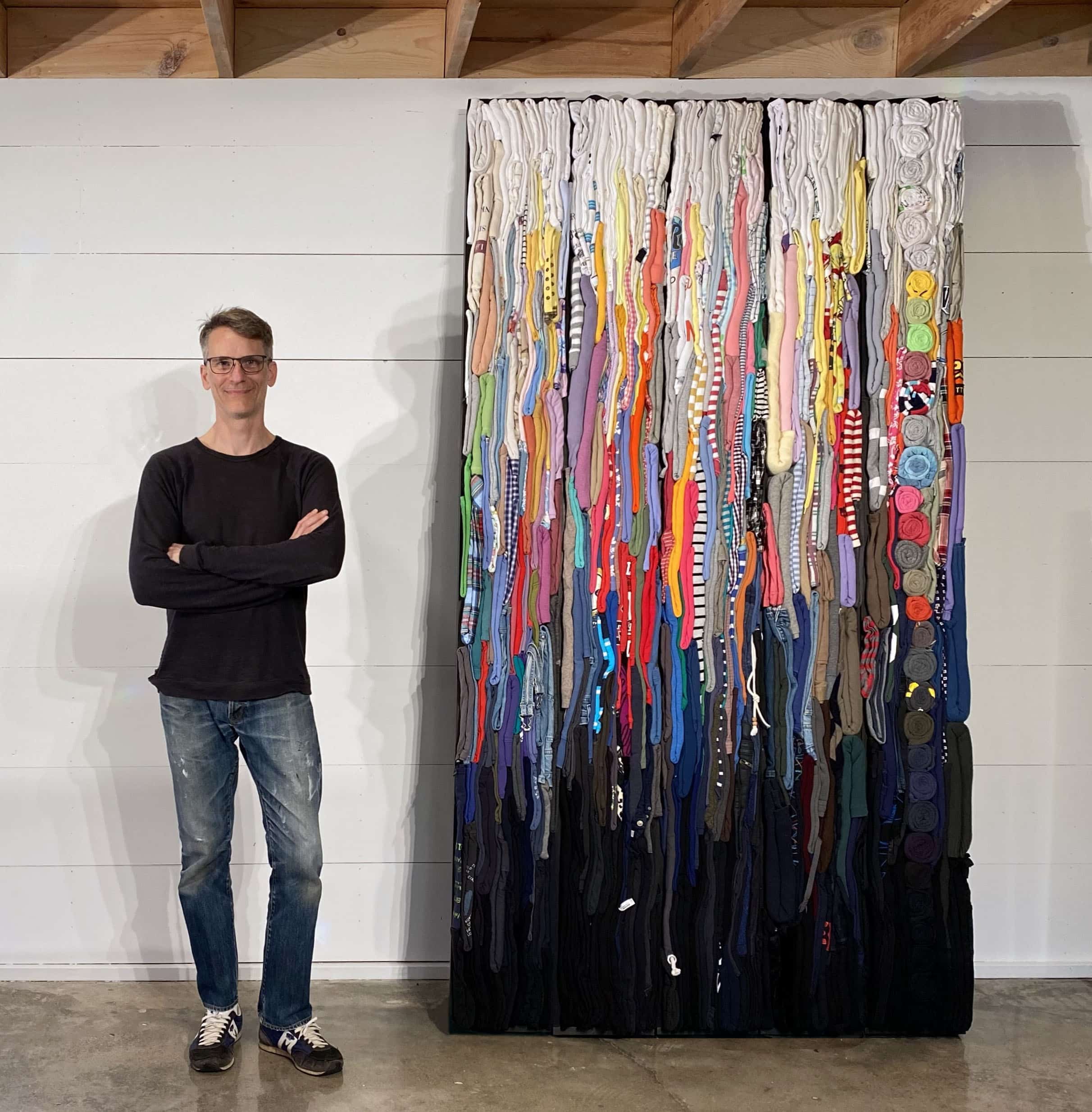
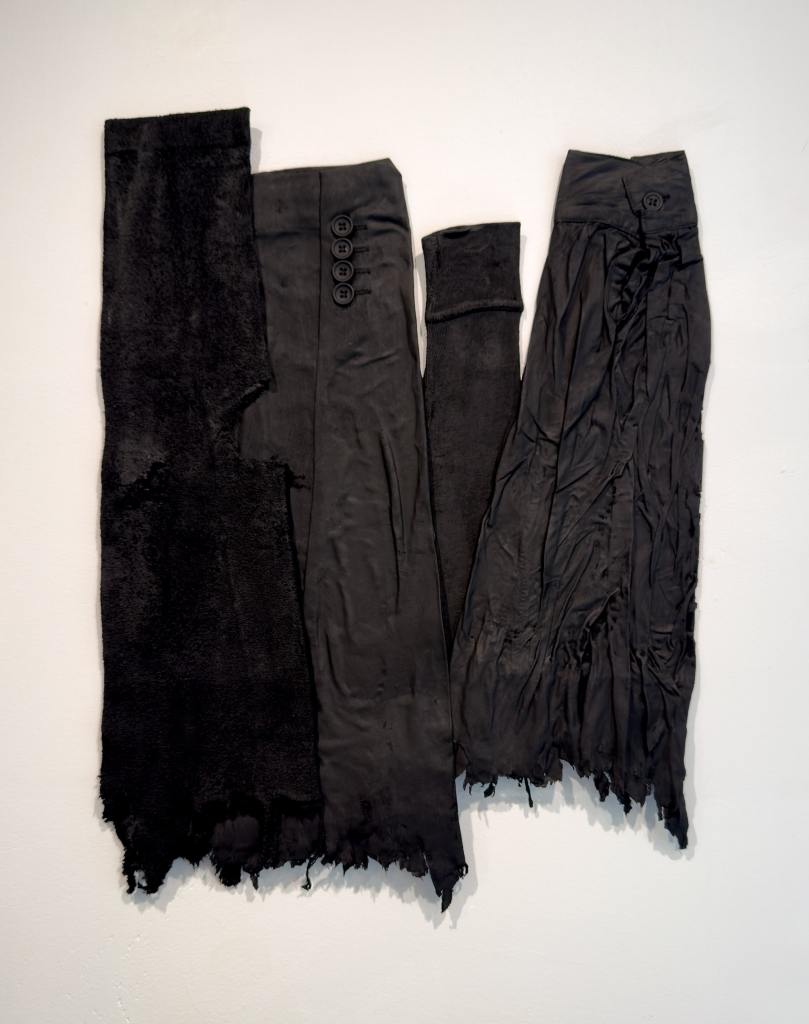
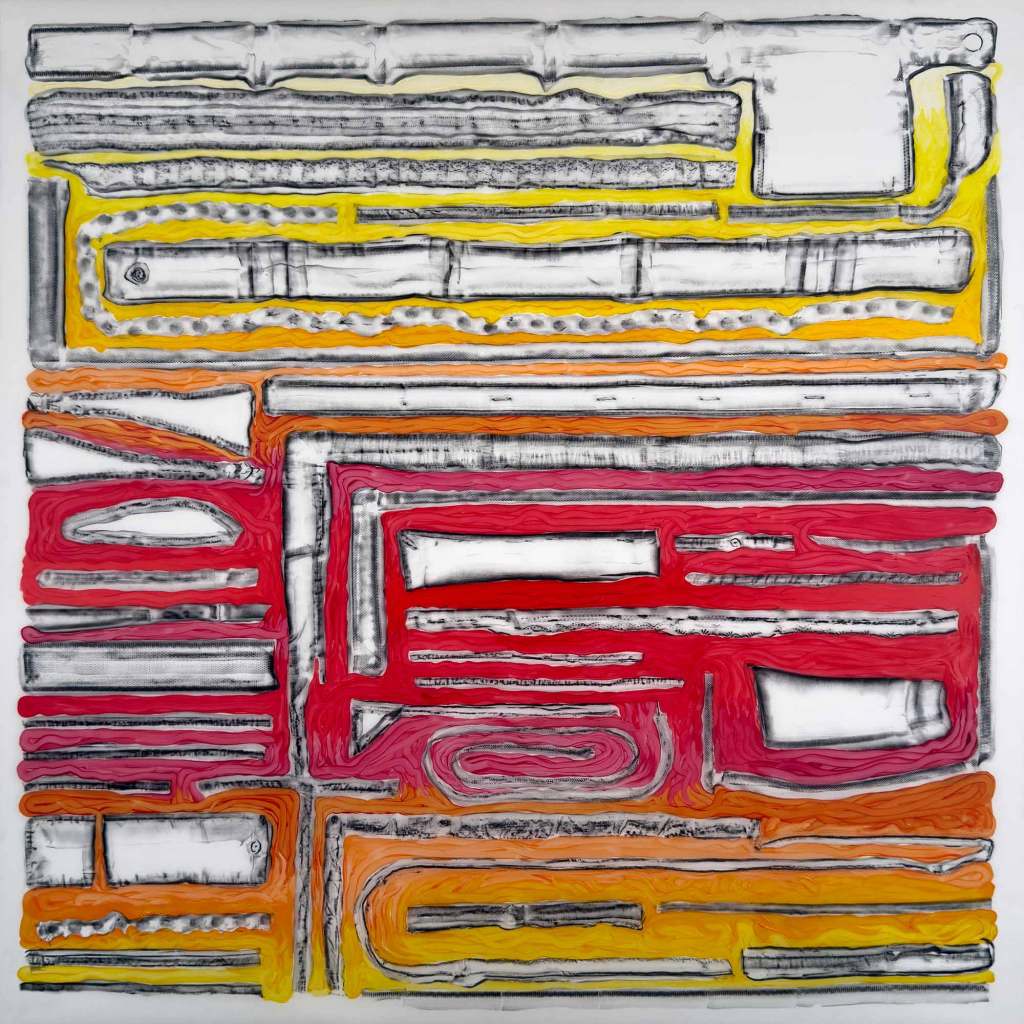
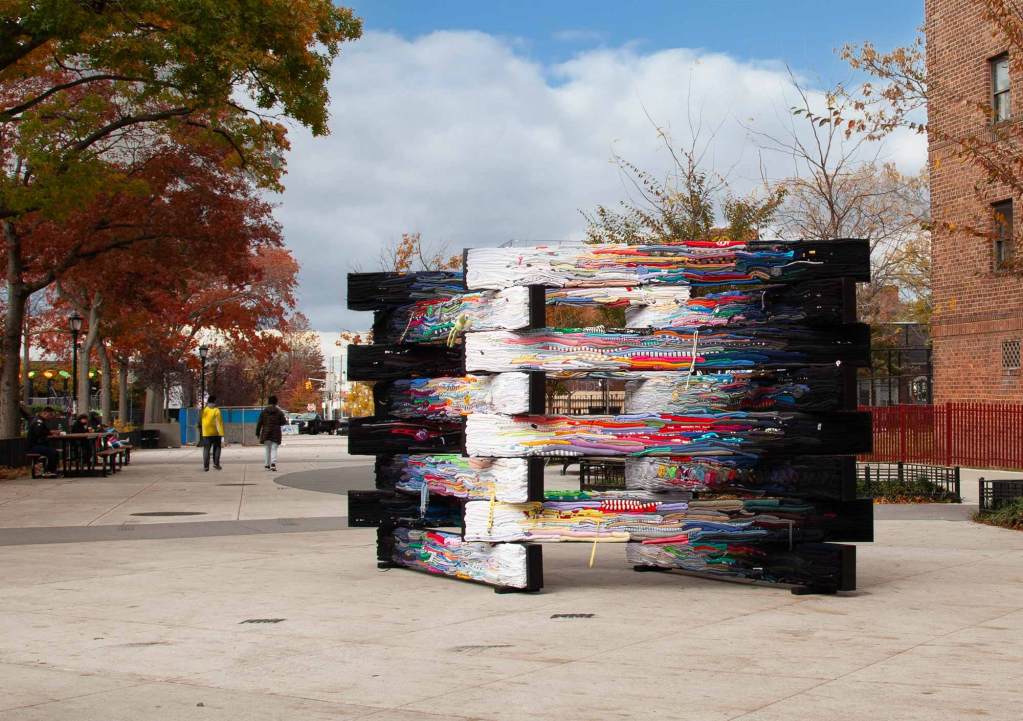
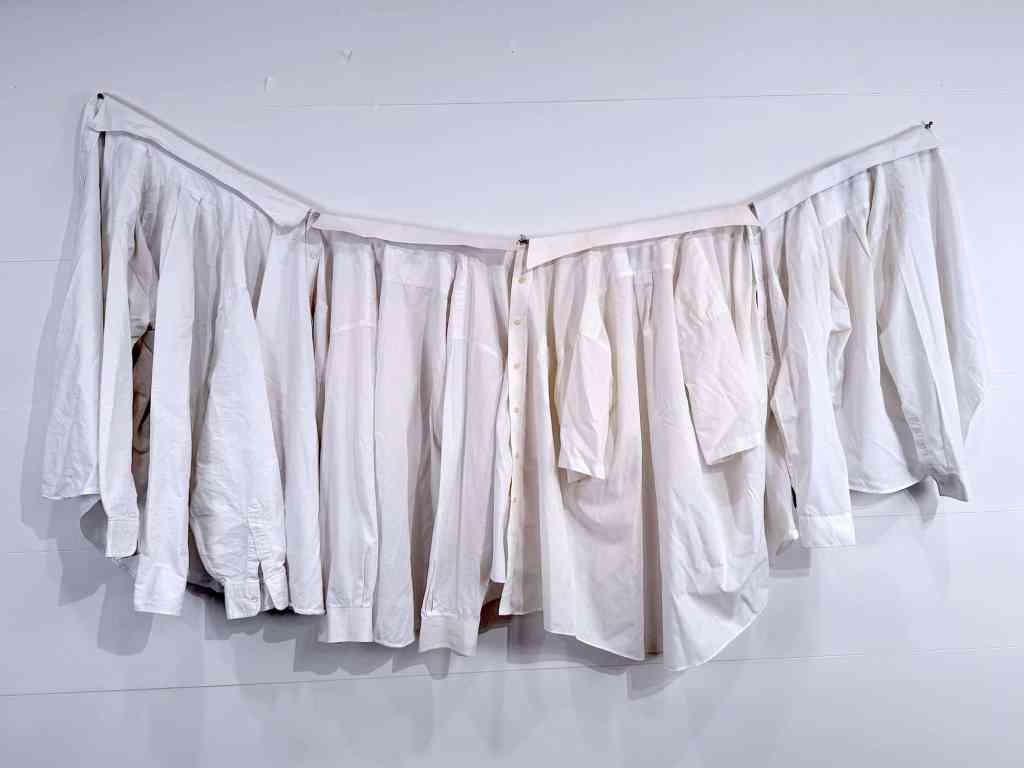
I’m an idea-driven artist, so I create work based on the concept rather than sticking to a specific style. That approach has led me to use a wide range of materials over the years. In my mid-30s, I became obsessed with second-hand clothing and almost everything I have done since is somehow tied to that. That said, I can go from video to drafting film set design in a single season.
In 2015, I created a site-specific work for the Museum Rijswijk in The Hague, The Netherlands. For this show, I made a clothing sculpture incorporating the antique furniture and effects displayed in an 18th century period room. It was a super complicated project, with a tight deadline, but I love the way it came out. The work honored the past while bringing it into the present. As a bonus, the curators were great, and we enjoyed a glass of port wine every afternoon at 3. You can read more about it, here:
LISA:
You mentioned your work with clothing. What inspired you to start using this medium? It must be quite different than pencils and paints. Did working with these materials affect your creative process?
DERICK:
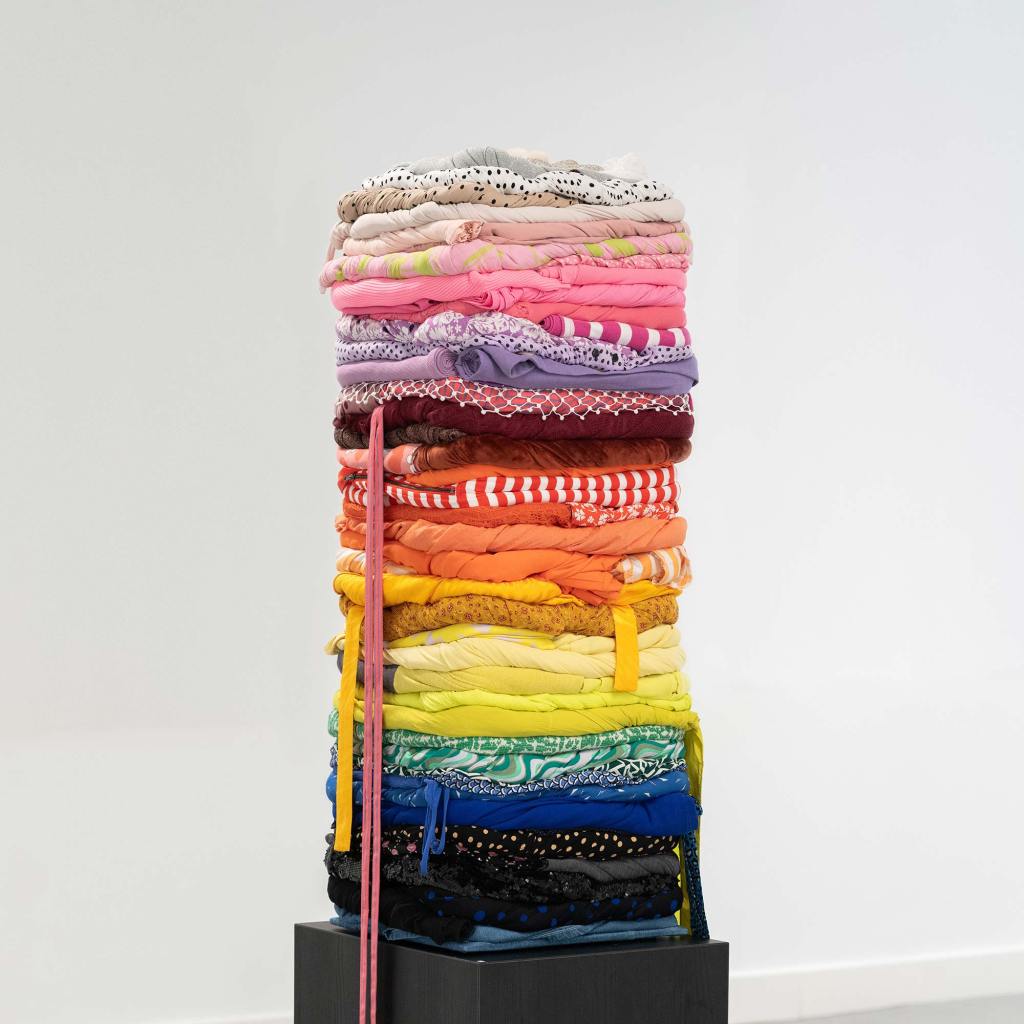
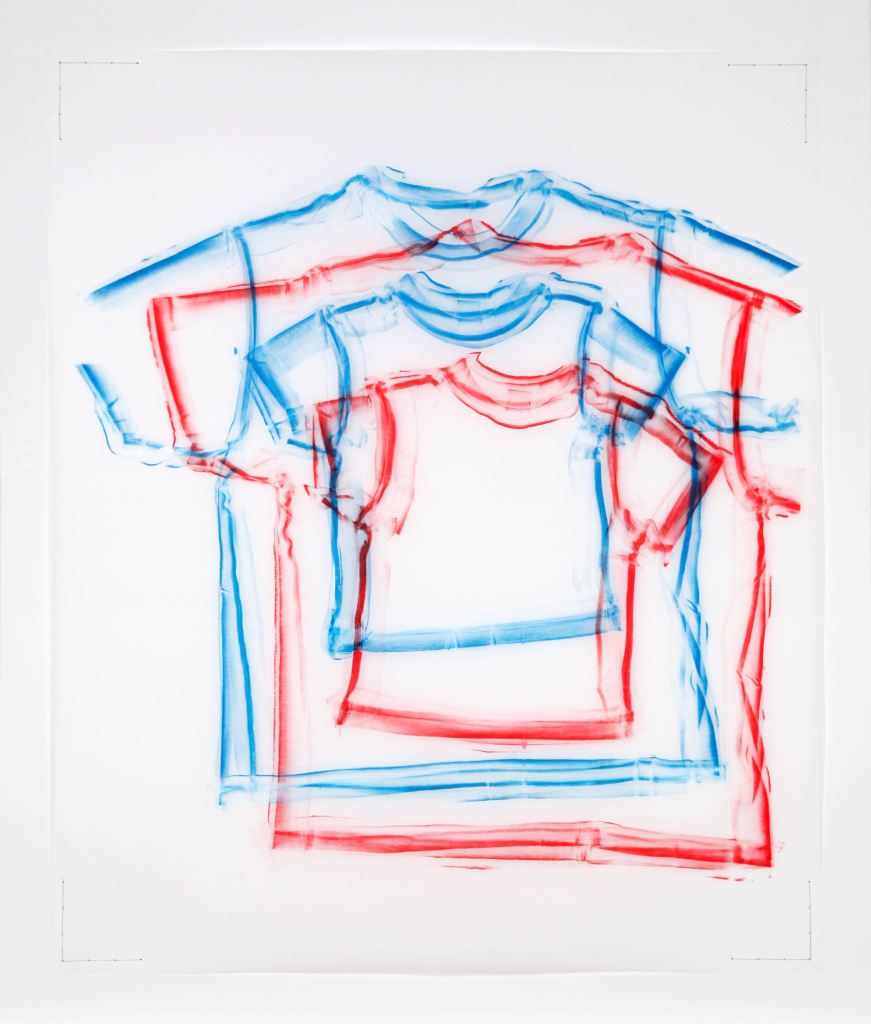
I began working with second-hand clothing in 2000. At the time, I was making sculptures out of antique metal suitcases and struggling to find a way to display them. I ended up making “pedestals” from folded and stacked second-hand clothing, which felt conceptually aligned with the sculptures. One of those early works is here:
The more I worked with clothing, the more compelling it became. Within a year or two, I let the clothing take over—and I haven’t looked back since. I find second-hand clothing to be an emotionally resonant material. As it’s worn, it becomes a kind of second skin. It’s easy to acquire, satisfying to work with, and I love the endless variety of styles, textures, and colors it offers.
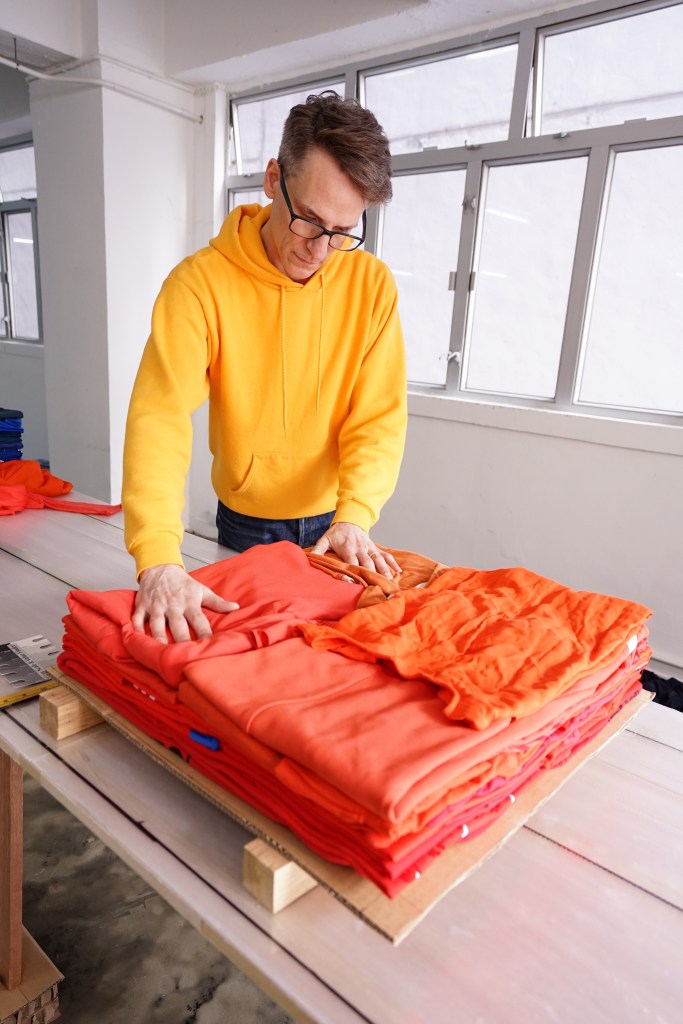
With larger works, I’ve had to learn to think like a producer. There’s a lot of planning and a lot of back and forth with people: city officials, conservators, curators, architects, fire wardens, engineers, textile recyclers, and the media.
When it comes to fabrication, I often work with teams of six to twelve people who I train, manage, and work alongside. I really enjoy that part of the process. Collaboration is one of the reasons I love being an artist. It gives me the chance to meet and connect with so many interesting people.
If the project is especially complex, I sometimes build a model to help everyone visualize the plan. From start to finish, a project typically takes six months to a year, depending on the scope. The pace ebbs and flows, but it’s always a pressure cooker in the final stretch.



LISA:
That’s so fascinating. I’ve seen lots of your pieces and it never occurred to me all of that extra behind-the-scenes work that’s involved. And I have to agree, you are one of the most collaborative creatives I’ve worked with.
In that same vein of working together for a common purpose, art has the capacity to not only challenge—as you said—but to unite. In this divisive time, what role do you feel art could have—or should have—to address the current tension?
DERICK:
Art communicates in a way that words often can’t. It bypasses the thinking mind and speaks directly to the heart, offering a chance to reflect, feel, and grow. Since only a small percentage of people visit galleries or museums, I believe it’s important for artists to create work for the public realm. Not just officially commissioned pieces but work that exists outside of sanctioned spaces: impromptu, ephemeral, participatory, and generous.


LISA:
Living the artist’s life takes an incredible amount of bravery, whether that be financially, taking risks, or having the strength to be vulnerable in front of large audiences. In what ways has this been worth it for you?
DERICK:
Honestly, I keep at it because if I don’t, I start driving everyone around me crazy. I think of it as a public service. There is some truth to that, but seriously, I really love transforming space. When I make a piece, I find it deeply satisfying to think about where I started and where I ended up. It can be expensive, and it takes as much time as I’m willing to give, but it helps me grow and feeds my spirit.
If you are doing it right, being vulnerable is a part of it. But you take a big risk when you go after something, and just as big a risk when you don’t. I make a fool of myself from time to time. I’ve learned to accept that, and once I did, it got a lot easier.
LISA:
Ah, well I think fools are the most lovable ones of all. Derick, thank you so much for sharing these ideas with us. Where can people find your work?
DERICK:
Please follow me here: https://www.instagram.com/derickmelander/
And sign up for my mailing list here: https://derickmelander.com/contact/
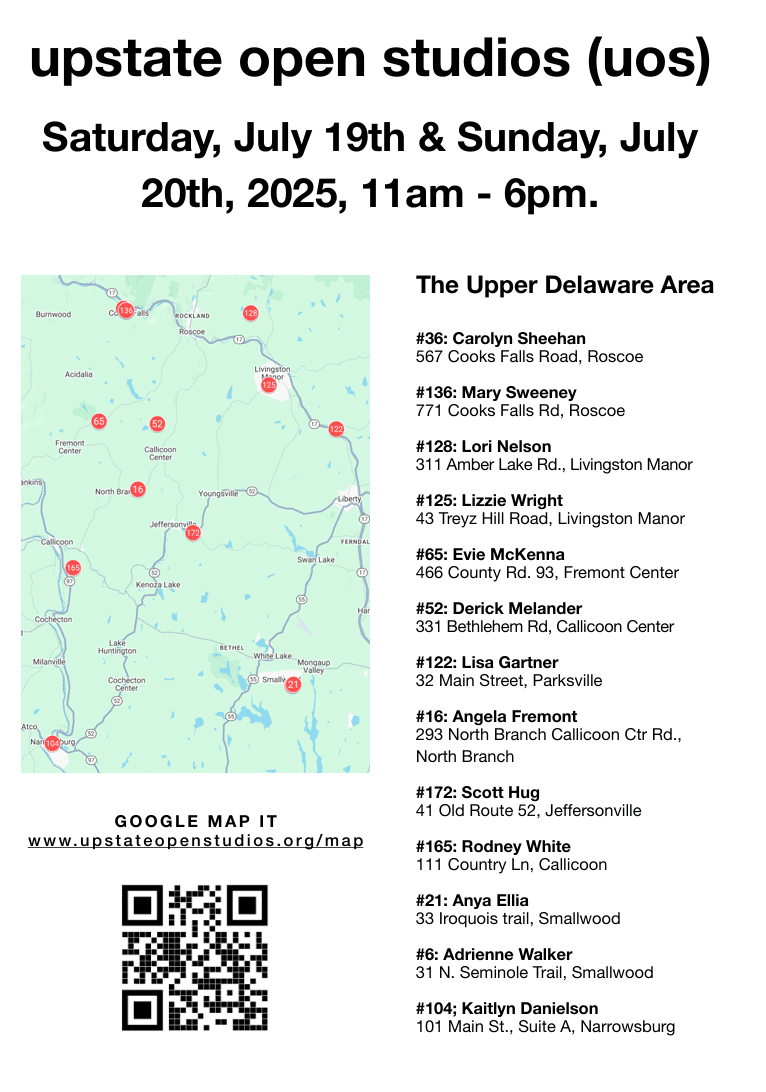
Plus, if you’re in the New York region, you can check out my studio in mid-July.
Thank you so much!