
Chances are, if you’ve worked with Reify, you’ve met Benoit. He’s the French one that lives in Peru and helps with all things development (and so much more)! Ben has worked with companies large and small to solve all their problems with tech, and has been a great team member and friend to us at Reify. We talked to him about his career, intercontinental lifestyle, and what he thinks about the future of AI.
You’ve walked a unique life path, crossing through different careers and countries. Talk a little about your experiences.
Well, I won’t say it’s unique, but it is a bit different for sure. After graduating in Web Design/Web Development in Paris in the early 2000s, I got the chance to visit New York with my mom just a couple of months before 9/11 and fell in love with the city.
I can’t really say I wanted the American Dream; life at home was pretty good. I knew I was really privileged to be raised in Paris. But I had clear interest in a lot of American culture, such as Hip-Hop, NBA Basketball, etc. I knew the US was the place to be (at least at that time).
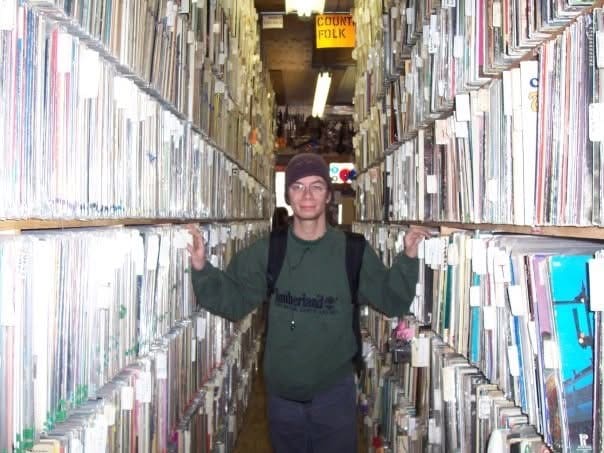
I also knew that I would need to speak in English for my career. So, I asked my mom if she would be willing to help me finance a year in New York to study English as a second language.
At the end of my year of ESL studies, I had to do an internship as part of the program. I wanted to do well because I knew this could eventually lead to me staying in the US and applying for a J1 VISA. When I was first interviewed for one of my first jobs in the U.S., I could tell the interviewer was surely not convinced that this French dude with long hair, a beret and a strong accent would be cut out for this. Luckily, he still gave me a chance and we ended up working together for over 15 years.
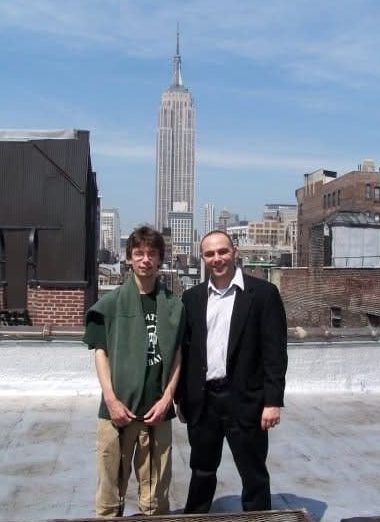
With a J1 VISA in my pocket, I started a longer internship program of 18 months in NYC, where I got the chance to work in an office in Chelsea and live in the Lower East Side with roomates when it was still affordable. But the VISA eventually expired. So, I was confronted with my first big choice. Do I apply for an H1 VISA, or do I go back to Europe? I decided on the latter.
Now, here comes the next question. Where in Europe? Of course, France was the easy option, but I knew I would lose my English if I moved back there. Luckily, I was working at a remote ad agency, so I could carry on working for the same company but live abroad. One of my coworkers lived in England, so I said England it is! I lived there for the next eight years.

While living in England, I had the opportunity to travel to Peru. I just had to visit Machu Pichu. During this trip, I met a lovely woman named Cecilia who would later become my wife. In 2014, she and I moved to Lima, Peru to start our life together.

After a few years working at a creative agency out of Fairfield, CT called Haddad & Partners, the owner said to me, ”We need to grow our development department, and you’re going to lead it. Can you create a team in Peru?” So, over the course of a few years, I went from intern webmaster to CTO. But I also wanted to find a way to help people here in Peru. I approached Laboratoria, a web development & UX program, that promotes workforce development for women in tech and brought several of their graduates onto my team.
Then, in late 2023, I met up with Lisa Wright [Reify Creative’s founder] at a large tech conference called the Web Summit in Lisbon, Portugal, shortly after she launched the company. In 2026, I was able to finally join Reify full time, in the capacity of CTO.

What have you learned from living all over the world?
I think one of my biggest learnings has been to stop being stuck in my ways. People from different cultures approach things differently.
For example, punctuality isn’t really a thing in Peru. Places like the U.K or the U.S have a punctual culture, while France is somewhere in the middle.
I also learnt quickly that I will always be an outsider in France now. Because I haven’t lived there so for long, I now do things differently.
For me, it’s all about adapting, and enjoying new experiences, new cultures, new ways of doing things… new customs. And ultimately embrace the differences!
How do you feel living in Peru now? This much be rather different than Europe and the U.S.
I love living in Peru. My wife and I could have lived in Europe, but we decided it would be Peru for us. I just needed to learn Spanish and we were rolling.
Peru is different. It’s a different world than what I have experienced before. This was the first country I lived in which wasn’t a fully “said” developed country, a country with a strong indigenous culture (such as the Inca empire) and it isn’t predominantly white like all the other countries I lived in previously.
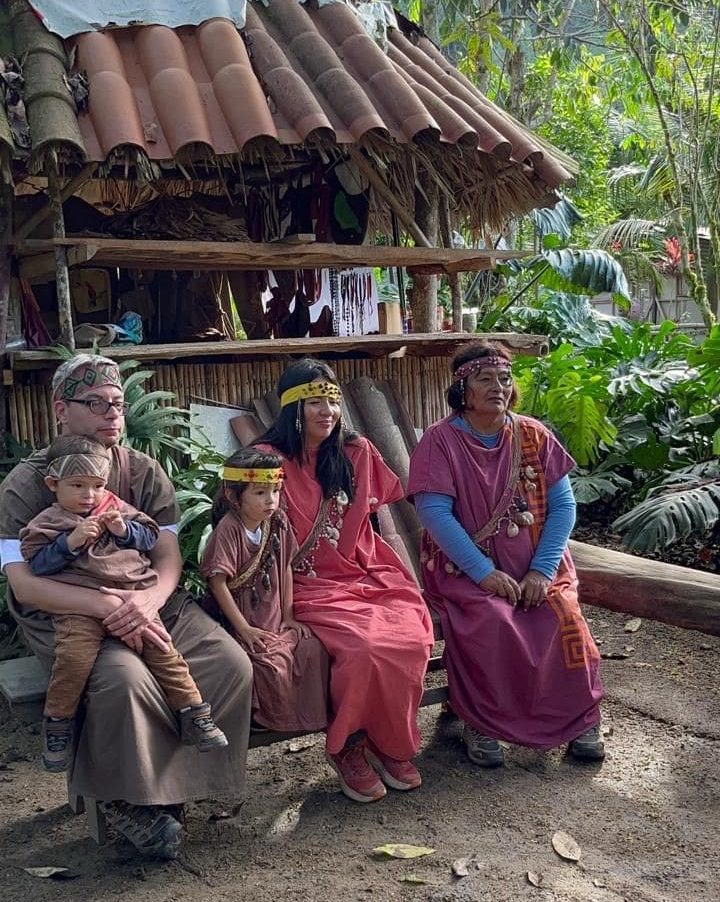
One of the things that attracted me to Peru (besides its amazing food and great scenery), was the values that are still present here. There are clear family values, clear support systems between people and a sense of community. And the energy vibe… the energy here is similar to what I felt in NYC in the early 2000s. People here are creative, resilient, and relentless — which is admirable in a country with so many difficult political situations.
As for being different from living in the US or Europe, we can start with infrastructure & poverty. Part of Peru still has people that live without running water, electricity, or refrigerators. Greater Lima has a population of nearly 11.7 million people (about twice the population of Arizona), so as you can imagine, the traffic is chaos.
One of the other big differences is that people tend to embrace change much more. In Europe or the U.S, people tend to have a much more structured schedule and tend to plan months ahead, even for a simple meeting with friends. Here, plans can change at the last minute. Peruvians are masters at the art of letting go.

On the topic of work, what are you excited about coding these days? What do you think things will look like 10 years from now?
Even though I’m kind of an AI skeptic because I feel there is going to be a need for some control and regulations (the European in me), I also need to adapt and not live under a rock. I recently started coding with AI assistance using software such as Codex.
I think 10 years from now AI will be completely integrated into the way we work, the same way emailing and internet are now. AI is one of the most disruptive techs we’ve ever had, but so was the Internet. I also feel that in 10 years we’ll know the limit of AI and hopefully this will stop the massive layoffs we’re seeing now, and it’ll just become another tool we use to improve our productivity (and sometimes our lives).
AI presents an interesting conundrum in that it does make a lot more accessible to the underserved, yet it’s also fraught with ethical issues, too. How do you think companies and coders should navigate this shaky terrain, particularly for individuals and businesses that may want to use these tools to keep up with those who are more affluent?
First, I’d like AI to not become a tool to justify shorter timelines, smaller budgets, and massive layoffs — all while using everyone’s private data.
But let’s look at the positive side. Much like the internet did before, AI is leveling things out and is opening opportunities never seen before, business-wise or… anything wise really.
Young people in Latin America are just as versatile and experimental as their counterparts in the rest of the world. AI is tool that can improve access to knowledge to underserved people.
It levels up the competitive advantage that the more affluent had for decades, and yes, it allows you to produce certain things faster than before. Now, there is still a catch. AI is still heavily dependent on a small group of large companies that hold most of our data. These datacenters are the infrastructure of our world. That, to me, is a tad frightening.
I know you’re most passionate about Reify’s projects that help support communities and education. Which types of projects or relationships make you feel most fulfilled at the end of the day?
Yes, any projects that help make people’s lives better are my favorite. Projects for libraries, universities, schools, or anything education or community-related will always grab my attention.
As for the relationships, what interests me the most is being exposed to people from all walks of life, different talents, and working with people in totally different industries. That keeps thing interesting and challenging. It’s a bit like swapping countries occasionally!
Want to meet with Ben to see how he can help with your tech needs? Shoot us an email at hello@reifycreative.com to get started.